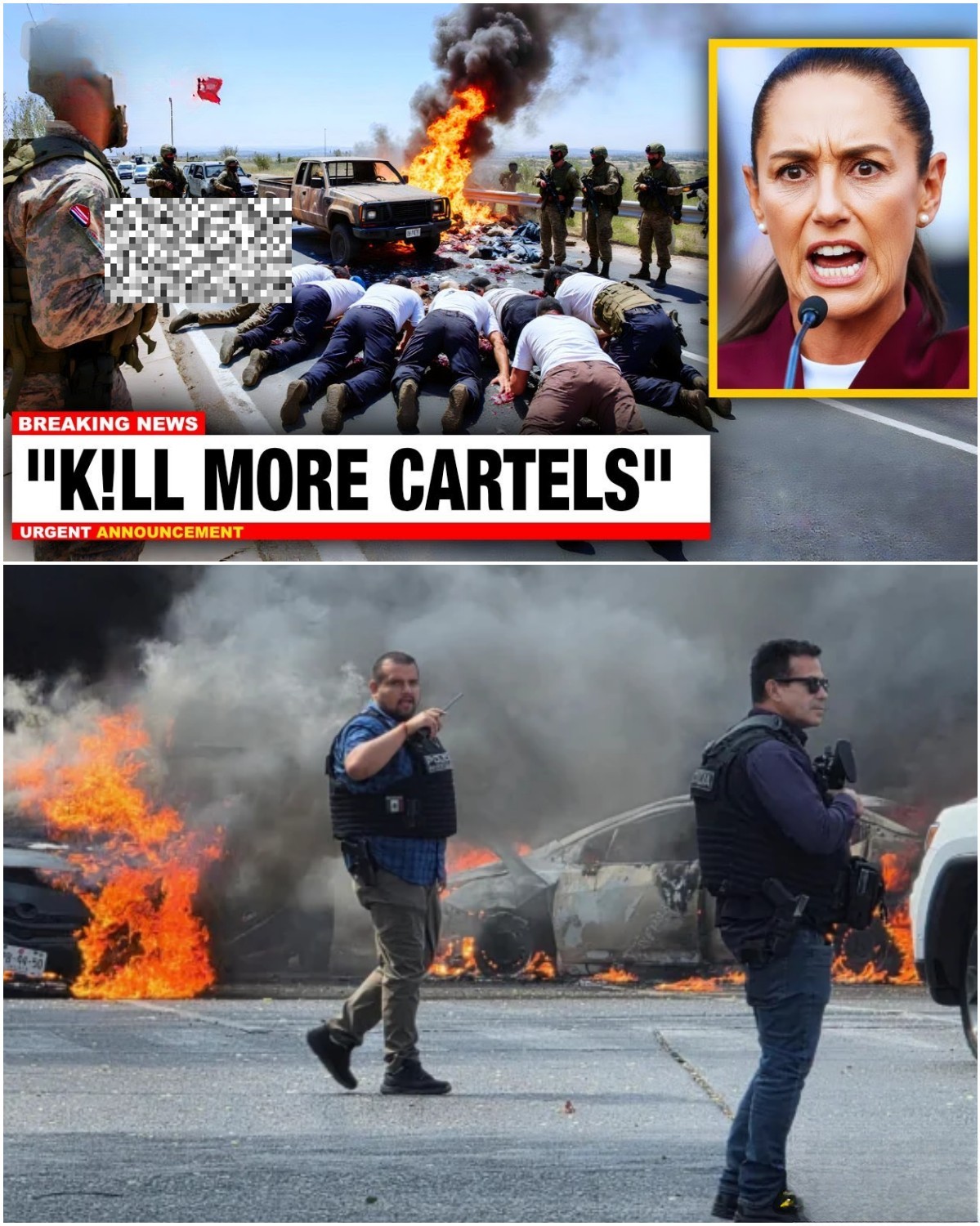
In recent years, the city of Uruapan in the Mexican state of Michoacán has frequently appeared in national headlines as authorities continue efforts to address organized crime activity in the region. Reports circulating online have described dramatic scenarios involving secret brigades and large-scale ambushes targeting the Jalisco New Generation Cartel (CJNG). However, when evaluating such claims, it is essential to rely on verified information from reputable institutions and official statements.
This article examines what is publicly known about security operations in Michoacán, the role of federal authorities under President Claudia Sheinbaum, the documented presence of Cártel Jalisco Nueva Generación, and the broader political and social implications of anti-cartel enforcement in Uruapan. All information referenced here is based on reporting from established outlets and official government communications.
Security Challenges in Uruapan and Michoacán

Michoacán has long faced complex security challenges due to the presence of organized criminal groups competing for territory, trafficking routes, and local influence. According to data from Mexico’s National Public Security System and reporting by outlets such as El Universal and Reuters, Uruapan has been identified as a strategic area because of its geographic location and economic activity, including agricultural exports.
The CJNG, one of Mexico’s most prominent organized crime groups, has been cited by Mexico’s federal government and the United States Department of Justice as a key actor in transnational criminal investigations. The group has been sanctioned by the U.S. Treasury Department and is the subject of ongoing law enforcement efforts in both Mexico and the United States.
While social media narratives often portray cinematic-style confrontations, verified reports typically describe coordinated law enforcement operations conducted by the Mexican Army, the National Guard, and state police forces.
Federal Strategy Under Claudia Sheinbaum
Since assuming office in 2024, President Claudia Sheinbaum has stated that her administration would continue security coordination between federal and state authorities. Public policy statements have emphasized intelligence-led operations, institutional strengthening, and inter-agency collaboration.
Official communications from Mexico’s Secretariat of Security and Citizen Protection (SSPC) outline strategies that prioritize:
-
Intelligence gathering and data analysis
-
Cooperation with state prosecutors
-
Targeted arrests based on judicial warrants
-
Coordination with the National Guard
There has been no verified public record confirming the existence of a “secret brigade” operating outside formal military or law enforcement structures. Mexican security operations are typically conducted under the authority of the armed forces or National Guard, and large-scale engagements are documented through official press releases.
Intelligence and Surveillance: How Operations Are Conducted
Modern security operations in Mexico increasingly rely on intelligence tools, including aerial surveillance, signal monitoring (subject to legal oversight), and inter-agency information sharing. According to reports from Reuters and the Associated Press, coordinated raids often involve:
-
Advance intelligence gathering
-
Deployment of National Guard units
-
Roadway monitoring and checkpoints
-
Judicial oversight through arrest warrants
These procedures reflect an institutional approach rather than an unofficial strike unit. Law enforcement operations are subject to Mexican constitutional law and, in many cases, reviewed by federal prosecutors.
Reported Operations in Michoacán
In past federal operations in Michoacán, authorities have reported detentions of suspected cartel members, seizure of vehicles, and confiscation of illicit materials. The Mexican Secretariat of National Defense (SEDENA) regularly publishes summaries of security actions.
However, claims that a single operation resulted in the confirmed elimination of dozens of individuals in one coordinated ambush are not supported by verified reporting from reputable outlets. Large-scale confrontations, when they occur, are typically covered by multiple national and international media organizations.
Without corroboration from agencies such as SEDENA, the SSPC, or credible news organizations, such numerical claims remain unverified.
Political and Legal Oversight
Security policy in Mexico is often debated in Congress and scrutinized by civil society organizations. Human rights groups, including Amnesty International and Mexico’s National Human Rights Commission (CNDH), regularly monitor law enforcement practices.
Any allegation of extrajudicial actions would trigger investigations by:
-
Federal prosecutors
-
Internal military review boards
-
Independent oversight institutions
Publicly, the Sheinbaum administration has reiterated its commitment to constitutional processes and rule of law. Official statements emphasize that operations must comply with legal standards.
The CJNG’s Documented Presence in Michoacán
The CJNG has been identified by Mexican and U.S. authorities as operating in several Mexican states, including Michoacán. According to the U.S. Drug Enforcement Administration (DEA) National Drug Threat Assessment, the organization has expanded its influence over the past decade.
In Michoacán, competition between criminal groups has historically contributed to instability. Federal deployments to the region have fluctuated depending on intelligence assessments and security priorities.
Still, experts caution against viewing organized crime dynamics as static. Academic researchers from institutions such as the National Autonomous University of Mexico (UNAM) note that alliances and rivalries between groups frequently shift.
Community Impact and Public Perception
Residents of Uruapan and surrounding communities often experience the indirect consequences of security operations. Temporary road closures, checkpoints, and increased patrols are common during coordinated enforcement actions.
Local businesses and schools may adjust schedules during heightened security activity. Civil society organizations emphasize the importance of maintaining transparency and communication to reduce uncertainty among residents.
At the same time, many citizens express support for effective law enforcement that restores stability and economic confidence.
The Role of Intelligence Leaks and Internal Rivalries
In organized crime investigations globally, authorities sometimes benefit from insider cooperation. Federal prosecutors in Mexico have confirmed in various cases that information from detained individuals has contributed to subsequent operations.
However, specific claims of high-ranking cartel members providing operational details that led to large-scale ambushes in Uruapan are not substantiated by official reports.
Legal proceedings in Mexico require evidence to be presented in court, and confirmed cases of cooperation are documented through judicial records.
International Implications
Security developments in Michoacán are closely followed internationally. The United States, through agencies such as the Department of State and DEA, maintains cooperative agreements with Mexico on security matters.
Sanctions and extradition requests related to CJNG figures have been publicly documented. However, operational decisions within Mexico remain under the jurisdiction of Mexican authorities.
International observers often focus on:
-
Human rights compliance
-
Institutional transparency
-
Regional stability
These factors influence diplomatic dialogue and economic considerations.
Separating Narrative from Verified Fact
Online content sometimes blends dramatic storytelling with real geopolitical tensions. Headlines referencing “shadow wars” or “secret brigades” may attract attention, but responsible reporting requires corroboration.
Reputable sources for confirmation typically include:
-
Official Mexican government press releases
-
National outlets such as El Universal or Milenio
-
International organizations like Reuters and AP
-
Public judicial records
When such sources do not confirm specific details, caution is warranted.
The Broader Security Landscape
Mexico’s broader security strategy involves balancing enforcement with social investment initiatives. Federal programs have aimed to address root causes of criminal recruitment through economic and educational policies.
Experts argue that sustainable progress requires:
-
Strengthened judicial institutions
-
Professionalized police forces
-
Community engagement
-
Economic development
Short-term enforcement operations alone may not resolve structural challenges.
Transparency and Public Accountability
Transparency remains central to public trust. Mexico’s Freedom of Information laws allow journalists and citizens to request certain government records. Oversight institutions and investigative journalists play a role in ensuring accountability.
If a major operation of the scale described in viral accounts had occurred, multiple official statements and independent reports would typically follow.
To date, no publicly available documentation from Mexico’s federal security institutions confirms the existence of a clandestine strike brigade responsible for a large-scale ambush in Uruapan matching the claims described in online narratives.
Conclusion: Ongoing Efforts, Verified Facts
Security in Michoacán continues to evolve as authorities address organized crime through institutional mechanisms. President Claudia Sheinbaum has publicly supported coordinated federal-state action within constitutional frameworks.
The presence of the Cártel Jalisco Nueva Generación in parts of Mexico is well documented by both Mexican and international authorities. However, dramatic accounts of secret brigades conducting off-grid ambushes in Uruapan are not supported by verified public evidence.
As with any complex security issue, careful reliance on reputable sources is essential. Public understanding benefits from transparency, documented facts, and responsible reporting rather than speculation.
The situation in Michoacán remains dynamic. Future developments will likely be accompanied by official statements and coverage from established news organizations, ensuring that accurate information is available to citizens and international observers alike.
For readers seeking updates, monitoring official releases from Mexico’s Secretariat of Security and Citizen Protection, as well as coverage by international outlets such as Reuters and the Associated Press, provides the most reliable pathway to understanding ongoing security efforts in Uruapan and beyond.