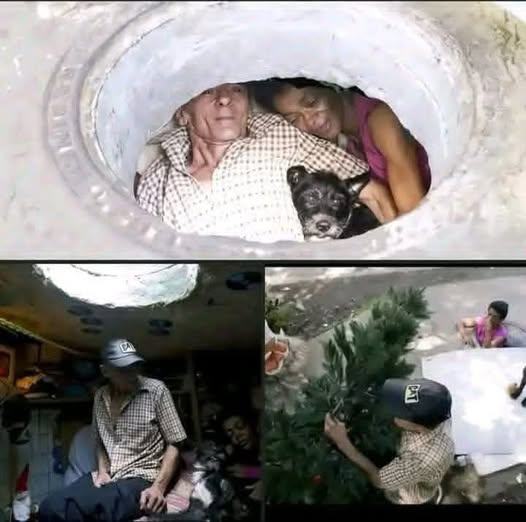
In cities across the world, the distance between stability and displacement has narrowed. Rising housing costs, limited affordable rental supply, wage stagnation, and fragile safety nets have placed growing pressure on households. For some, that pressure results in overcrowding or frequent moves. For others, it leads to temporary shelters never intended for human habitation.
A recent online post described a couple and their dog sheltering inside a large concrete drainage pipe. While the specific location and identities were not verified by official authorities, the image reflects a documented global reality: when traditional housing becomes inaccessible, people often turn to improvised spaces simply to survive.
This article explores what such a scene represents within the broader context of housing insecurity, what reliable data shows about homelessness worldwide, and which evidence-based strategies communities are using to respond.
When Shelter Becomes Improvised
![Family living in abandoned sewer[5]|chinadaily.com.cn](https://usa.chinadaily.com.cn/world/attachement/jpg/site1/20121205/0013729e431912291d3109.jpg)
From the outside, a drainage pipe may appear to be construction debris. Inside, however, it can become a makeshift living space: a mattress set against a curved concrete wall, personal belongings carefully arranged, small objects suggesting routine and normalcy. These details are not dramatic; they are practical. They show an effort to create structure in the absence of stable housing.
Improvised shelters like this offer minimal protection from weather. They may shield from wind and partial rain, but they provide no insulation, plumbing, sanitation, or reliable safety. Even so, in situations where no formal housing is available, temporary spaces become a critical form of survival.
According to global housing assessments cited by United Nations sources, homelessness and inadequate housing affect hundreds of millions of people worldwide. A UN Department of Economic and Social Affairs summary referencing UN-Habitat estimates notes that more than 300 million people globally experience homelessness, and billions live without access to adequate housing conditions. These figures highlight that housing insecurity is not isolated to one region; it is a systemic issue.
The Economic Pressures Behind Housing Insecurity

Housing instability rarely stems from a single cause. Instead, it often results from overlapping economic pressures. The Organisation for Economic Co-operation and Development (OECD) tracks housing affordability and notes that a significant portion of low-income tenant households in member countries are considered “housing cost overburdened,” meaning they spend more than 40 percent of disposable income on housing. When rent consumes such a large share of income, even a small financial shock can create a crisis.
OECD data also shows that rent prices increased in many countries between 2019 and 2024. While rates vary by country, upward trends have strained budgets in both high-income and middle-income economies. When housing supply fails to keep pace with demand, competition intensifies and affordability declines.
Economic stressors commonly associated with housing loss include job instability, reduced work hours, medical expenses, family separation, or sudden rent increases. In many documented cases, individuals experiencing homelessness were previously housed but lost stability due to a combination of these pressures rather than a single dramatic event.
Homelessness in Documented Data

In the United States, the Department of Housing and Urban Development (HUD) publishes the Annual Homeless Assessment Report (AHAR), which provides data collected from communities nationwide. The 2024 report indicates increases in both sheltered and unsheltered homelessness in certain areas, with contributing factors including limited affordable housing supply and the expiration of some pandemic-related protections.
While definitions and measurement methods differ across countries, the pattern is consistent internationally: where affordable housing is scarce and income growth lags behind housing costs, homelessness and precarious living conditions rise.
It is important to note that homelessness includes more than those living visibly on streets. It also includes people staying in cars, abandoned buildings, temporary encampments, overcrowded homes, or improvised structures like drainage pipes. These situations are often undercounted because they are harder to document.
Why People Remain in Unsheltered Conditions
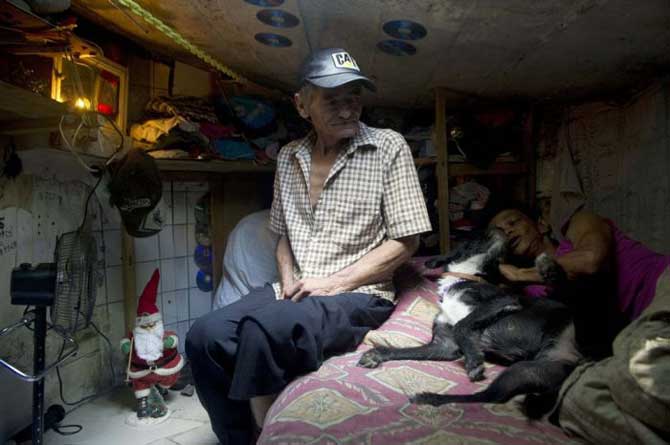
Many observers ask why individuals in precarious settings do not simply enter shelters. The answer is complex and varies by location.
In some cities, shelter capacity is insufficient relative to need. In others, restrictions—such as separation of couples, limited privacy, or inability to accommodate pets—create barriers. Some individuals also face documentation challenges, prior negative experiences, or fear of losing personal belongings.
The presence of a pet, as described in the viral post, highlights a significant factor. For many people experiencing homelessness, pets provide emotional stability, companionship, and daily structure. However, not all shelters allow animals, which can lead individuals to remain unsheltered rather than separate from their pets. Increasingly, service providers recognize this issue and expand pet-friendly shelter options.
Health and Safety Risks of Improvised Housing

Living in infrastructure spaces such as drainage pipes presents serious risks. Flooding is a major hazard, particularly during heavy rainfall. There is also risk of extreme temperature exposure, poor air quality, limited access to safe water, and sanitation challenges.
Public health research consistently shows that unsheltered homelessness is associated with elevated health risks due to environmental exposure, limited medical access, and chronic stress. Addressing housing insecurity therefore intersects directly with public health systems.
The fragility of improvised housing also affects long-term stability. Without a permanent address, individuals may struggle to access employment, healthcare, social services, or education. Housing functions not only as shelter but as the foundation for participating in civic and economic life.
Resilience Within Instability
Despite these challenges, resilience is often visible in small ways: organizing limited space, maintaining routines, caring for a partner or pet, preserving personal belongings. Such efforts reflect a desire for dignity and normalcy rather than resignation.
However, resilience should not be romanticized. While individual strength is admirable, structural solutions are essential. Housing insecurity is fundamentally a policy and economic issue that requires coordinated responses.
Evidence-Based Approaches to Reducing Homelessness
Research and policy analysis over the past two decades identify several strategies that reduce homelessness and housing instability when implemented effectively.
Expanding Affordable Housing SupplyIncreasing the number of affordable rental units reduces pressure on low-income households. OECD policy briefs emphasize the importance of both public investment and regulatory frameworks that encourage affordable development.
Rental Assistance and Eviction Prevention
Short-term financial support can prevent temporary income disruptions from escalating into eviction. Studies in multiple countries show that targeted rental assistance is often more cost-effective than emergency shelter after displacement occurs.
Housing First and Supportive Housing Models
Housing First approaches prioritize placing individuals into stable housing quickly and then providing supportive services as needed. This model has been evaluated in various countries and is associated with improved housing retention for people with complex needs.
Coordinated Outreach and Case Management
Effective outreach connects individuals living in unsheltered conditions to healthcare, identification services, employment programs, and housing placements. Data-sharing systems among service providers improve coordination and reduce duplication.
Pet-Inclusive Shelter Policies
Expanding accommodation options for pets removes a significant barrier to shelter entry and supports family stability.
Data-Driven Monitoring
Regular assessments, such as HUD’s AHAR in the United States or housing affordability databases maintained by the OECD, provide governments with actionable data to adjust policies.
The Broader Housing Landscape
Housing challenges are not limited to visibly unsheltered individuals. Overcrowding, frequent relocation, and cost overburden affect millions more households who may not appear in homelessness statistics.
Urbanization, construction slowdowns, land-use restrictions, and demographic changes all influence housing supply. Meanwhile, economic inequality widens the gap between income and rent. When wages stagnate but housing demand increases, affordability deteriorates.
International discussions increasingly frame housing as a fundamental social infrastructure issue. Ensuring stable housing contributes to economic productivity, public health, education outcomes, and community safety.
Community-Level Solutions
Local governments, nonprofit organizations, and community coalitions often lead innovative solutions. Examples include converting underused buildings into affordable units, expanding rapid rehousing programs, investing in supportive housing partnerships, and offering landlord incentives to participate in housing assistance programs.
Successful initiatives typically combine prevention with long-term supply strategies. Prevention addresses immediate risk factors, while supply expansion addresses systemic shortages.
Why Responsible Reporting Matters
Viral headlines such as “Breaking News: Family found in a…” can draw attention but may lack verified context. Responsible journalism avoids speculation and focuses on documented trends supported by credible data.
In cases where individual details are not confirmed by official authorities, it is appropriate to frame the story as illustrative of broader housing instability rather than as a sensational isolated incident.
Clear reporting ensures that the focus remains on solutions rather than shock value.
Housing as Stability and Opportunity
Housing is more than a roof. It represents safety, the ability to plan ahead, access to employment, healthcare continuity, and educational stability for children. When housing becomes unstable, all these areas are affected.
The drainage pipe described in the viral post symbolizes a gap between housing need and housing availability. It is a reminder that without affordable options and supportive systems, individuals improvise as best they can.
Conclusion
The image of a couple and their dog living inside a drainage pipe is not simply a story of personal hardship. It reflects documented global housing pressures driven by rising costs, limited supply, and economic vulnerability.
Reliable data from international organizations and government reports confirms that housing insecurity affects hundreds of millions worldwide. Addressing it requires coordinated policy, investment in affordable housing, prevention strategies, and service systems that recognize human dignity.
Behind every improvised shelter is not only resilience but also a policy question: how can communities ensure that stable housing is accessible before displacement occurs? Sustainable solutions depend on evidence-based planning, collaboration, and a commitment to treating housing as a foundation for social and economic well-being.
Sources
United Nations Department of Economic and Social Affairs (referencing UN-Habitat global housing estimates)
Organisation for Economic Co-operation and Development, Housing Affordability and Cost Burden Data
U.S. Department of Housing and Urban Development, 2024 Annual Homeless Assessment Report