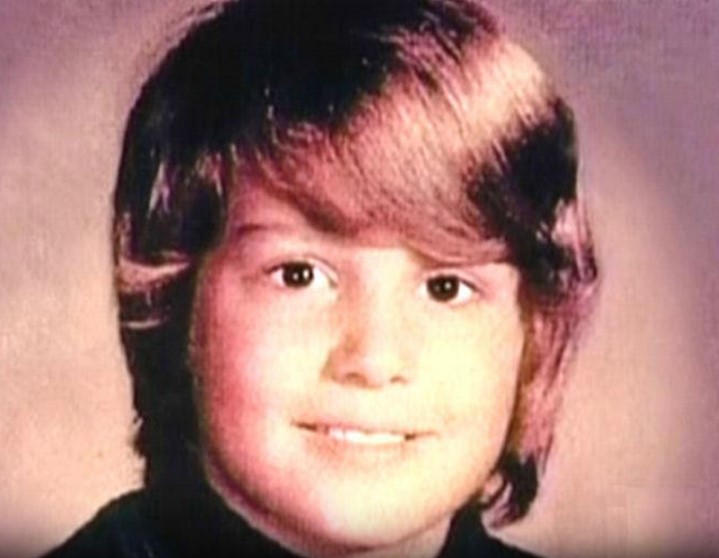
There are Hollywood stars, and then there are superstars.
The man at the center of this story belongs firmly in the latter category — one of the most recognizable actors of his generation, a global icon whose face has defined decades of popular cinema. He has been named Sexiest Man Alive more than once, starred in some of the highest-grossing franchises in history, and built a career that few could rival.
But long before fame, red carpets, and box office success, he was just a little boy growing up in fear.
A childhood without safety
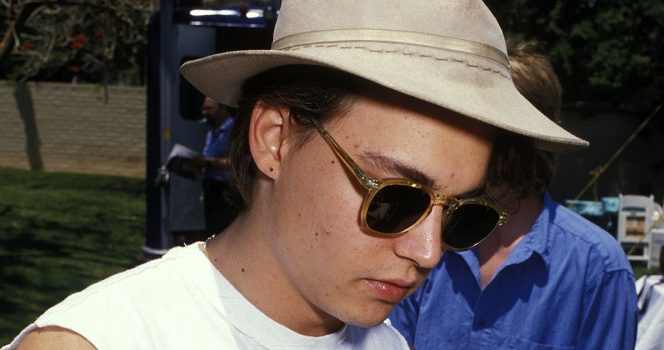
Behind the glamorous image of stardom lies a childhood marked not by security, but by chaos and pain. Born in a small town in Kentucky as the youngest of four children, he grew up in a working-class household. His mother worked as a waitress, while his father was a civil engineer. The family moved frequently during his early years, eventually settling in Florida in 1970.
Inside the family home, life was unstable and often frightening.
In later interviews, the actor described an upbringing dominated by violence and emotional turmoil. Physical abuse was common, he said, taking many forms — objects thrown in anger, blows delivered with whatever was within reach. But it was the psychological abuse, he explained, that left the deepest scars.
The constant verbal attacks, the humiliation, and the unpredictability created an environment where safety simply didn’t exist. He learned early how to endure pain, how to absorb it, and how to keep going — not because he was strong, but because he had no other choice.
A father who endured in silence
The abuse, he revealed, came primarily from his mother, Betty Sue Palmer. His father, by contrast, responded very differently.
He remembered his father as a quiet, restrained man who absorbed the abuse without retaliation. When confronted with his wife’s rage, even in front of the children, his father remained calm, never striking back, never raising his voice. At times, the actor recalled seeing tears well in his father’s eyes — but never once did he see him respond with violence.
As a child, he couldn’t understand why his father stayed. Why he endured. Only years later did he come to see his father’s behavior not as weakness, but as a kind of stoic dignity.
Eventually, his father left the family when the actor was 15 years old. At the time, the decision felt like abandonment. In adulthood, he came to understand it as survival.
Early exposure to substance abuse

After the separation, his mother’s struggles deepened. She fell into severe depression and attempted to take her own life by ingesting a large number of pills. She survived, but never fully recovered. According to her son, she spent long periods confined to the couch, physically frail and emotionally absent.
Her addiction, tragically, became his introduction to substances.
He has openly acknowledged that he began taking pills from his mother’s supply at just 11 years old. By 12, he was smoking. By 14, he had experimented with nearly every substance available to him. For a child trying to numb fear and emotional pain, drugs became an escape — one that would follow him for decades.
Despite everything, he later reflected on his upbringing with an unexpected sense of clarity. He said that while his mother caused him pain, she also taught him something invaluable: how not to raise children.
Finding a way out
After dropping out of high school in 1979, he joined a band and moved to Los Angeles. Acting, he later admitted, wasn’t something he planned — it happened almost by accident.
A longtime friend encouraged him to contact an agent, leading to auditions and eventually a role in a horror film that marked his entry into Hollywood. From there, his career accelerated quickly.
In the 1990s, he became a teenage heartthrob — but unlike many of his peers, he resisted the traditional mold. He rejected polished celebrity expectations and gravitated toward unconventional roles that allowed him to express complexity rather than perfection.
A few years later, he landed the role that would transform him into a global superstar: Captain Jack Sparrow. The character’s eccentricity, vulnerability, and unpredictability made him iconic, earning critical acclaim and multiple award nominations.
Relationships, family, and breaking the cycle

As his career flourished, his personal life unfolded publicly. His first marriage ended early, followed by several high-profile relationships. Later, he entered a long-term partnership that resulted in two children.
Fatherhood, he said, changed everything.
His parenting philosophy was directly shaped by his childhood experiences. He made a conscious decision never to raise his voice in front of his children, never to rely on fear or punishment. Instead, he chose conversation, explanation, and emotional presence — the opposite of what he had known growing up.
He wanted his children to feel safe. To feel heard. To grow up without fear.
Public battles and personal truth
After his later marriage ended, he became involved in one of the most widely discussed legal battles of the modern entertainment era. During court proceedings, many painful details of his childhood resurfaced, offering the public a deeper understanding of the emotional wounds he had carried since childhood.
He testified openly about his long struggle with substance abuse, explaining that it began as a way to numb pain in an unstable home. For him, the trial was not just about reputation, but about truth — and about how history would remember him, especially for his children.
A quieter life

Today, he lives largely outside the Hollywood spotlight, choosing privacy over publicity. He has spoken about valuing peace, distance from chaos, and the freedom to live without constant scrutiny.
Professionally, he continues to work selectively, taking on roles that interest him rather than chasing fame. Personally, he appears focused on healing, reflection, and maintaining the stability he never had as a child.
From survival to self-awareness
His story is not just one of stardom, but of survival.
Behind the success lies a boy who grew up without safety, who learned resilience the hard way, and who spent much of his life unlearning pain. His journey reminds us that fame does not erase trauma — but understanding it can transform how a person lives, loves, and raises the next generation.
Sometimes, the brightest stars are forged in the darkest places.