Colorado Firefighters’ Calm, Careful Rescue of a Blind Horse Highlights the Power of Teamwork
Emergencies often arrive without warning, demanding quick thinking, patience, and compassion. In northern Colorado, a recent rescue involving a vulnerable animal became a powerful example of how preparation and teamwork can turn a frightening situation into a story of hope.
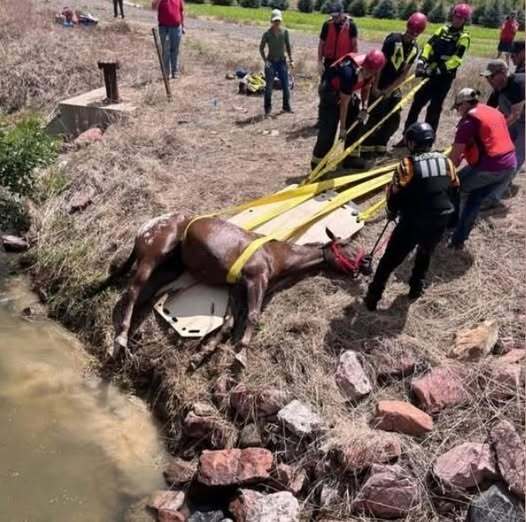
Firefighters from Poudre Fire Authority responded to a call that was far from routine. A blind horse named Lacy had become trapped in a canal, unable to find her way out. What followed was not a dramatic race against time, but a carefully coordinated effort built on training, trust, and respect for life.
A Morning Call That Required Specialized Skills
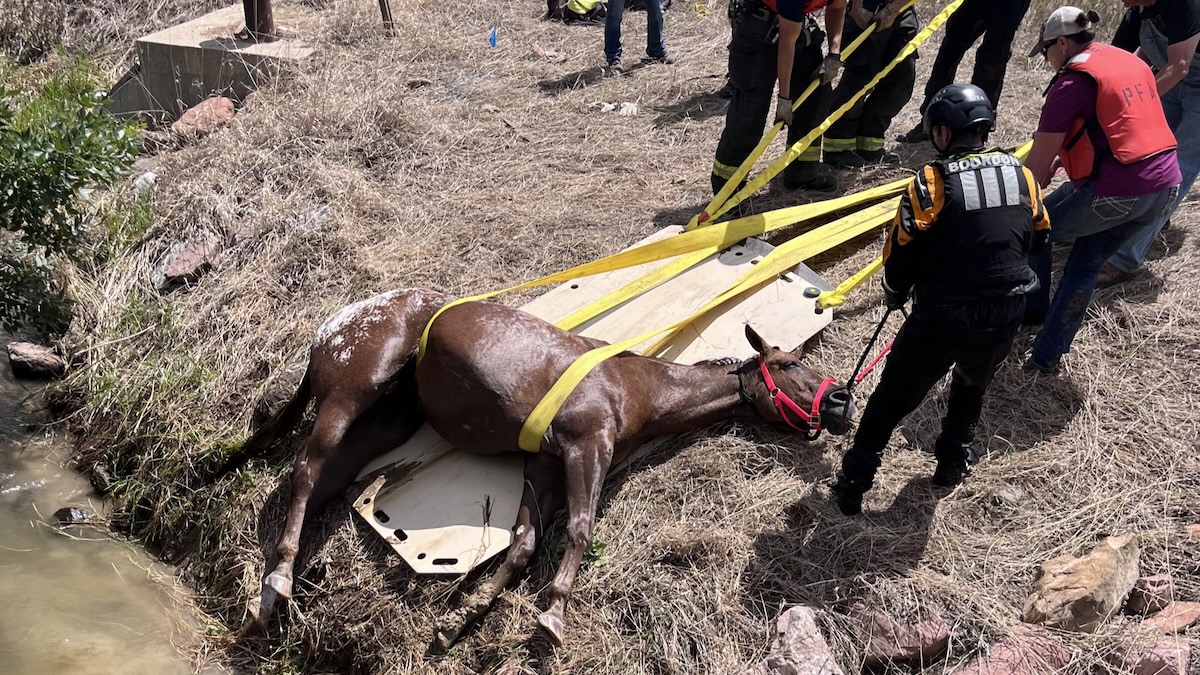
Shortly before 10 a.m., emergency responders were dispatched after reports that an elderly horse was stuck in a canal with moving water. The horse, later identified as Lacy, was in her twenties and had lost her eyesight, making the situation especially challenging.
Lacy had wandered into the canal and was unable to escape. The water level had risen to her shoulders, and the canal’s steep sides prevented her from climbing out on her own. While the water was not violently fast-moving, it posed a real risk to an animal unable to orient herself.
From the outset, responders recognized that this was not a situation that could be rushed.
Coordinating a Large-Animal Rescue
The response quickly grew into a collaborative operation. Alongside Poudre Fire Authority firefighters, the Large Animal Rescue Team was called in, bringing specialized experience in handling livestock emergencies. Veterinary professionals from Colorado State University also assisted, ensuring the horse’s health and safety remained the top priority throughout the rescue.
Emergency medical personnel from UCHealth were on standby as an added precaution, underscoring how seriously responders approached the situation.
This multi-agency coordination ensured that every aspect of the rescue—physical, medical, and logistical—was addressed with care.
Entering the Canal With Precision and Calm
One firefighter, trained in both swift-water and large-animal rescue, entered the canal to reach Lacy. The approach was deliberate and slow. Horses are powerful animals, and when frightened, they can unintentionally injure themselves or rescuers.
Understanding Lacy’s blindness was crucial. The rescuer used calm movements and steady contact to avoid startling her. A harness was gently secured around her neck and body, designed to support her weight without causing stress or discomfort.
Rather than attempting to lift the horse directly from the steep canal walls, the team made a strategic decision.
Choosing the Safest Path to Freedom

Rescuers guided Lacy downstream, moving her slowly beneath a nearby bridge toward a section of the canal where the slope was less severe. This plan reduced risk and allowed the horse to rely on her own strength as much as possible, rather than forcing an extraction that could have caused injury.
Throughout the process, responders maintained constant communication, adjusting their approach based on Lacy’s reactions. The goal was not speed, but stability and safety.
Once they reached the shallower area, Lacy was able to find solid footing and climb out of the canal with guidance from the team.
A Quiet Moment of Relief
When Lacy finally reached dry ground, the tension of the rescue eased. Veterinarians assessed her condition, confirming that she had not suffered serious injury. Though shaken and tired, the horse remained calm—a testament to the careful handling throughout the operation.
There were no dramatic gestures or celebratory scenes. Instead, there was a shared sense of relief among everyone involved. The rescue had succeeded because it respected the animal’s limitations and relied on coordination rather than force.
Why Large-Animal Rescues Matter
Incidents like this are a reminder that emergency services do far more than respond to fires or medical calls. In rural and semi-rural communities, animals are often an essential part of families and livelihoods.
Large-animal rescues require specialized training that goes beyond standard emergency response. Firefighters involved in these operations must understand animal behavior, anatomy, and stress responses, all while managing environmental hazards like water, terrain, and weather.
This rescue demonstrated how investment in training and inter-agency cooperation can save lives—both human and animal.
The Role of Preparation and Community Support

Officials later emphasized that outcomes like this depend heavily on preparation. Regular training exercises, partnerships with veterinary experts, and access to proper equipment all played a role in ensuring Lacy’s safe rescue.
Community members who reported the situation quickly also contributed to the positive outcome. Early notification allowed responders to act before conditions worsened.
More Than a Rescue, a Reflection of Values
Stories like Lacy’s resonate because they reflect something deeply human: the willingness to protect the vulnerable, even when doing so requires extra effort and patience.
Lacy could not call for help or understand what was happening around her. She depended entirely on the compassion and expertise of those who responded. The fact that so many professionals came together for an elderly, blind horse speaks volumes about the values guiding their work.
A Gentle Ending to a Difficult Moment
After the rescue, Lacy was returned to her caretakers, who expressed gratitude to everyone involved. What could have ended in tragedy instead became a quiet reminder that skill, empathy, and teamwork can change outcomes.
For the firefighters and rescue teams, it was another call answered—one that showcased not just bravery, but restraint and respect for life.
Conclusion
The rescue of Lacy in Colorado was not defined by dramatic urgency, but by calm decision-making and cooperation. It showed how emergency responders adapt their skills to protect all members of a community, including those without a voice.
In moments like these, heroism is not loud. It is patient, careful, and guided by experience. And sometimes, it looks like a group of professionals standing in the water, guiding a frightened animal back to safety.