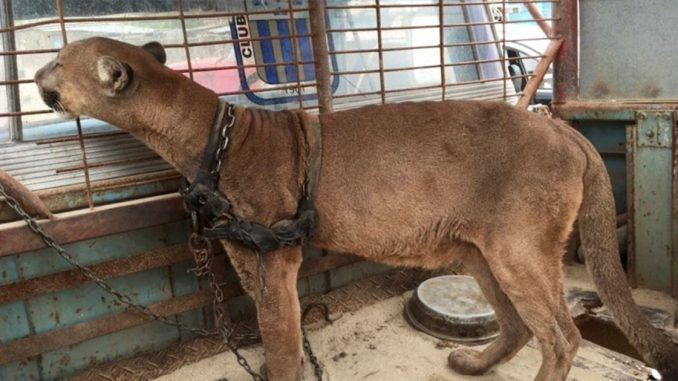
Circus Mountain Lion Rescued After Two Decades in Captivity Highlights Ongoing Animal Welfare Concerns
Wild animals are biologically and behaviorally adapted to live in natural environments that allow movement, social interaction, and mental stimulation. When confined for long periods under unsuitable conditions, many species experience significant physical and psychological stress. One widely reported case that brought renewed attention to this issue involved a mountain lion named Mufasa, who spent nearly two decades confined as part of a traveling circus in Peru.
Mufasa’s eventual rescue became a powerful example of the challenges faced by wild animals used for entertainment and the importance of continued efforts to protect animal welfare.

Life in Long-Term Confinement
Mufasa was held for approximately 20 years as part of a mobile circus operation. According to animal welfare organizations involved in the case, he was kept in extremely limited space and transported frequently, conditions that are inconsistent with the natural needs of a large wild cat.
Mountain lions, also known as pumas or cougars, are solitary animals that typically range across vast territories in the wild. Prolonged confinement restricts their ability to move, hunt, and engage in normal behaviors, which can contribute to chronic stress and declining health over time.
Animal welfare experts emphasize that such conditions, while still present in some regions, are increasingly recognized as harmful and incompatible with modern conservation and ethical standards.
Discovery During a Broader Investigation
Mufasa was discovered during an investigation led by Animal Defenders International (ADI), an organization that works globally to end the use of wild animals in circuses. In 2015, ADI was assisting authorities in Peru as part of an effort to enforce national regulations that restricted or banned the use of wild animals for entertainment purposes.
During this process, the organization identified several animals being kept under inadequate conditions, including Mufasa. After months of legal and logistical work, ADI was granted permission to remove him from captivity.

The Rescue and Transition to Freedom
Once released, Mufasa was transferred to a protected natural area where he could live in an environment closer to his species’ natural habitat. For the first time in many years, he had access to open space, vegetation, and the ability to move freely without restraint.
According to caretakers, this transition led to visible changes in his behavior. While years of confinement had clearly affected his physical condition, the opportunity to explore and rest in a natural setting appeared to reduce stress and improve his overall comfort.
Wildlife specialists note that even late-life rehabilitation can provide meaningful benefits to rescued animals, improving quality of life even if full physical recovery is not possible.
Health Challenges After Release
Despite the positive impact of his rescue, Mufasa’s health had already been compromised by years of captivity. Veterinary evaluations indicated age-related conditions, including kidney failure, which are not uncommon in older large cats, particularly those exposed to long-term stress.
Mufasa lived only a few months after his release before passing away later in 2015. Animal Defenders International confirmed that his death was due to natural causes related to his age and health history.
While his time in freedom was brief, conservationists emphasized that it allowed him to spend his final months without confinement, under veterinary supervision, and in a more humane environment.

Why Mufasa’s Story Matters
Mufasa’s case resonated internationally because it highlighted broader issues surrounding the use of wild animals in entertainment. Although many countries have strengthened regulations in recent years, animal welfare organizations estimate that numerous animals worldwide are still kept in inappropriate conditions for performance or display.
Scientific research consistently shows that wild animals experience stress when denied space, environmental enrichment, and species-appropriate social structures. Over time, this stress can affect immune function, mobility, and lifespan.
Stories like Mufasa’s serve as reminders of why international standards increasingly discourage or prohibit the use of wild animals in circuses and similar shows.
Progress and Remaining Challenges
In Peru, Mufasa’s rescue coincided with growing enforcement of animal protection laws. Similar progress has been made in other countries, with bans or restrictions introduced to protect wildlife from exploitation in entertainment industries.
However, experts stress that legal changes must be accompanied by enforcement, public awareness, and long-term solutions for rescued animals, including sanctuaries and rehabilitation programs.
Animal welfare groups also emphasize the importance of education, encouraging the public to support entertainment and tourism options that do not involve animal exploitation.
A Symbol of Change
Although Mufasa’s life was marked by prolonged captivity, his rescue became a symbol of what coordinated action between governments and animal welfare organizations can achieve. His story continues to be shared as an example of compassion, responsibility, and the growing global recognition of animal rights.
Conservationists note that while one rescue cannot undo decades of suffering, it can influence policy, inspire reform, and improve conditions for other animals in similar situations.
Conclusion
Mufasa’s release after 20 years in captivity highlighted both the progress made and the challenges that remain in protecting wild animals from exploitation. His final months, spent outside confinement, underscored the importance of humane treatment and evidence-based animal welfare practices.
As awareness continues to grow, cases like Mufasa’s reinforce a simple but essential principle: wild animals deserve environments that respect their biological needs and natural behaviors. Continued advocacy, regulation, and public support remain critical to ensuring that fewer animals endure similar conditions in the future.