
A Courtroom in Lübeck, and a Moment That Split a Nation
On March 6, 1981, a courtroom in Lübeck, northern Germany, became the setting for one of the country’s most debated acts of violence in the modern era. Marianne Bachmeier, a 33-year-old single mother, walked into the room carrying grief that had already reshaped her life beyond recognition. Her young daughter, Anna, had been killed the year before. The man on trial, Klaus Grabowski, was accused of taking the child and ending her life.
What happened next stunned everyone present. In the middle of the proceedings, Marianne fired at the defendant and killed him. It was an act committed in full view of judges, lawyers, police, and spectators—an act that instantly turned a criminal trial into a national moral argument.
For decades afterward, Germany and much of the wider world returned to the same uncomfortable question: What happens when grief collides with justice—and a parent decides the courtroom cannot deliver an outcome that feels bearable?
The Loss That Set Everything in Motion
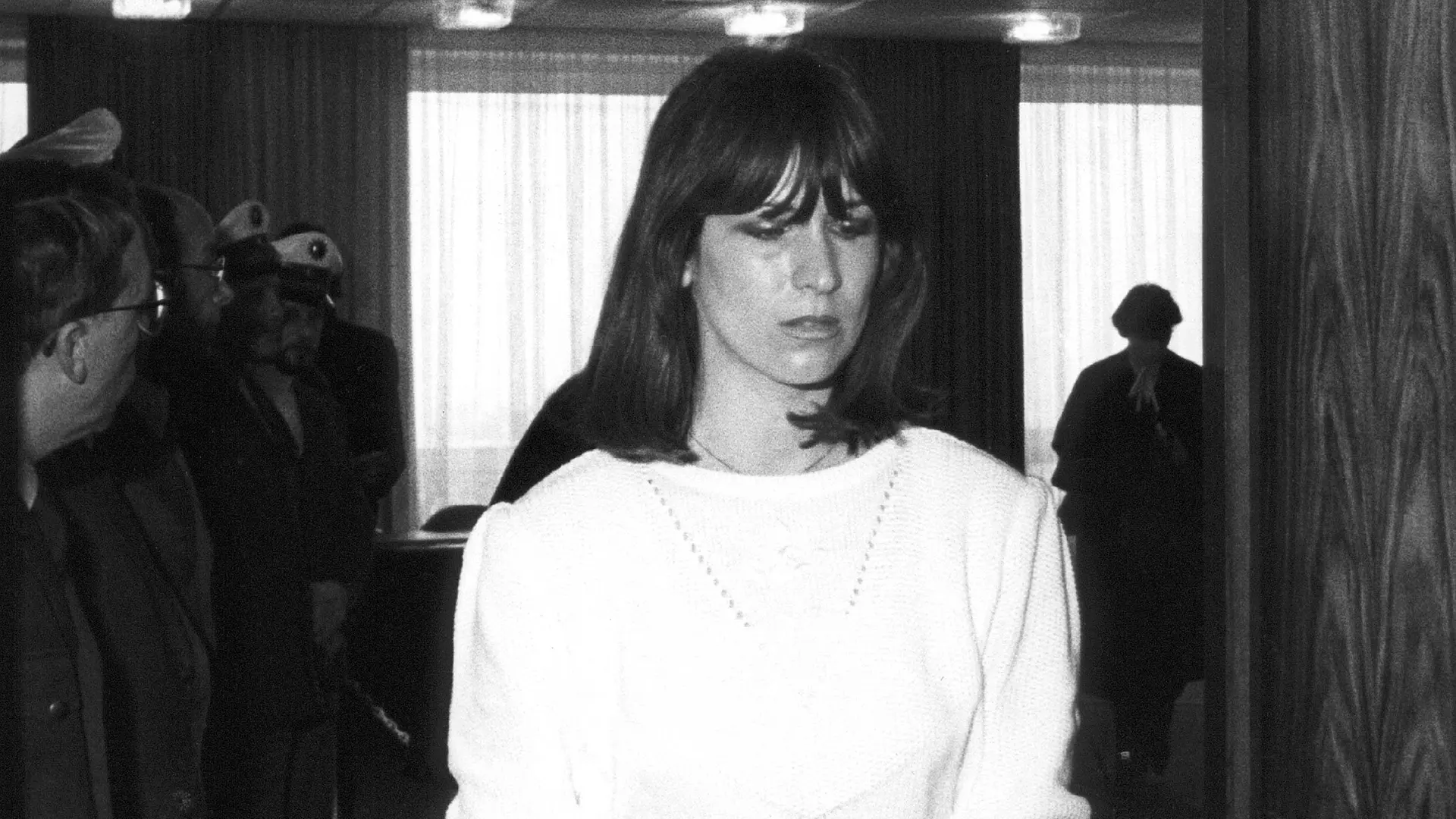
Long before the day of the courtroom shooting, Marianne’s life was already shaped by hardship. She was raising children on her own and trying to keep her family stable while managing financial pressures. Those who later followed the case often described her as someone living close to the edge of exhaustion—working, worrying, and trying to protect her children in a world that did not always feel safe.
Anna, her youngest child, was described as lively and open-hearted by people who knew her. In May 1980, the child left home after a disagreement and did not return. The circumstances of what followed were deeply distressing and became central to the public’s emotional response to the case.
Authorities later arrested a local man with a troubling criminal record. The allegations against him were severe and involved harm to a child. The details were painful for the public to read and even more painful for a parent to hear repeated in a formal setting.
The Accused and the Weight of a Prior Record

Klaus Grabowski had been known to the criminal justice system before Anna’s death. Reports from the time indicate that he had prior convictions related to sexual offenses involving children. That history became part of the public debate, not only because of the horror of the accusations, but because it raised questions about monitoring, rehabilitation, and the limits of the system’s ability to prevent repeat harm.
As the case moved to trial, the courtroom became a place where two realities met: the legal process, with its rules and procedures, and a mother’s grief, with its rawness and desperation. Even in societies committed to due process, certain cases strain the public’s faith in how justice is supposed to work—particularly when the victim is a child and the accused has a documented record.
Inside the Trial: When Grief Meets Procedure

The trial began in early 1981. For Marianne, sitting through testimony and statements was not simply a civic duty or a step toward closure. It was an ongoing confrontation with what had happened to her daughter, intensified by the slow and structured pace of the courtroom.
According to accounts of the proceedings, the defendant offered explanations that many viewed as self-serving and insulting to the memory of the child. For a grieving parent, hearing the victim’s character questioned—directly or indirectly—can feel like a second loss. It does not just reopen pain; it can reshape pain into anger.
Over the first days of testimony, Marianne’s emotional state reportedly deteriorated. The courtroom, meant to be a place of order and reason, became for her a place of unbearable exposure—where the worst moment of her life was described and dissected.
Then, on the third day of the trial, the proceeding stopped being about legal guilt and became about a sudden act of force. Marianne drew a firearm and killed the defendant.
The Shockwave: Public Reaction and Media Framing

The shooting ignited a media storm. Headlines spread rapidly, not only across Germany but internationally. Many reports framed Marianne as a symbol—either of parental grief taken to an extreme, or of dangerous vigilantism that threatened the foundations of law.
Public opinion split sharply. Some people expressed sympathy and even support, interpreting her actions as the result of a broken system or a broken heart—or both. Others argued that no matter the circumstances, violence inside a court undermines the very structure that prevents society from collapsing into retaliation.
This division wasn’t superficial. It touched core beliefs:
-
Is justice only legitimate when it is delivered by the state, through procedure?
-
Can a person’s emotional reality reduce moral responsibility, even if it doesn’t erase legal responsibility?
-
When the crime is horrific, do people quietly tolerate outcomes they would reject in any other context?
A widely cited survey from the time reflected this split, with respondents disagreeing on whether her sentence was fair—some viewing it as too harsh, others as too lenient, and others as appropriate.
Marianne on Trial: Intent, Responsibility, and Mental State

In 1982, Marianne faced her own trial. The legal question was no longer whether Anna had been harmed—those allegations were already the subject of the original case. The question was whether Marianne’s act in the courtroom was premeditated, and how the law should interpret her mental and emotional state.
Marianne reportedly stated that she experienced the moment as unreal or dreamlike, suggesting she was not fully anchored in rational thought. Psychological experts were brought in, and their assessments contributed to the court’s understanding of whether her actions reflected planning, emotional collapse, or a combination of both.
Courts in such cases confront a difficult balance: acknowledging trauma without excusing harm, recognizing grief without validating violence. Ultimately, Marianne was convicted of a serious violent offense and unlawful firearm possession. She received a prison sentence but did not serve the full term.
Even that outcome fueled debate. For some, the reduced time reinforced the idea that society quietly sympathized with her motive. For others, it signaled inconsistency: if the rule of law is the foundation, exceptions—especially emotionally popular exceptions—can weaken it.
Life After Prison: Trying to Live Beyond a Defining Moment
After her release, Marianne attempted to rebuild her life away from the spotlight. Reports indicate she lived abroad for a period, including time in Nigeria, and later spent time in Italy. Her story, however, never fully left her. The case had become more than a personal tragedy—it was a cultural reference point, revisited in documentaries, law discussions, and public conversations about grief and justice.
Later, she returned to Germany when she became seriously ill. Marianne died in 1996. She was buried beside her daughter, a detail that many people interpret as a quiet closing of a circle that never should have existed in the first place.
Why This Case Still Matters
The Bachmeier case continues to attract attention because it sits at the intersection of three emotionally charged forces:
Grief. The loss of a child is often described as uniquely devastating, not just because of death, but because it violates a basic expectation of life’s order.
Justice. Courts are designed to deliver decisions through evidence, process, and restraint—not through emotion, even when emotion is understandable.
Public morality. Societies routinely debate whether a legal outcome feels “right,” but this case forced people to confront what they really mean by “right” when the facts are unbearable.
In many discussions, Marianne becomes either a cautionary example or a symbol of emotional truth. But the reality is more complicated. Sympathizing with her pain does not require endorsing her act. Condemning her violence does not require denying her grief.
The Uncomfortable Questions the Story Leaves Behind
Cases like this expose weak points in the way societies talk about justice. People often say they want “closure,” but closure is not a legal product. A sentence cannot restore a life, and a verdict cannot undo what happened.
What the legal system can do is establish accountability and protect society by applying rules consistently. Yet the emotional reality for victims’ families can be profoundly different: they may experience the trial as a performance where the victim’s life is reduced to evidence and the perpetrator’s story is given space to continue.
That gap—between legal purpose and emotional experience—is where anger grows. And when anger grows in public, it can influence everything from sentencing debates to political calls for harsher punishments.
The Bachmeier case forces an additional question: If a society feels sympathy for retaliation in extreme circumstances, does that reveal a flaw in the justice system—or a flaw in human expectations of what justice can achieve?
A Tragedy Without a Clean Ending
There are stories that can be resolved neatly: a crime, a trial, a verdict, a sentence. The Bachmeier story resists that structure. It is not a tale of victory, and it is not a tale of simple moral failure. It is a case study in what happens when human pain overwhelms human systems.
In the end, two lives were lost—first a child, then the defendant in the courtroom—and a third life, Marianne’s, was permanently defined by what she did in the aftermath.
The case remains “famous” not because it offers an easy lesson, but because it refuses to.
It reminds us that the rule of law is essential precisely because emotion is powerful. It also reminds us that grief is not just sadness—it can become rage, desperation, and the longing to reclaim control in a world that has suddenly become uncontrollable.
That is why, decades later, the courtroom in Lübeck still echoes in public memory—not as entertainment, but as a warning about what grief can demand, and what justice can never fully repay.