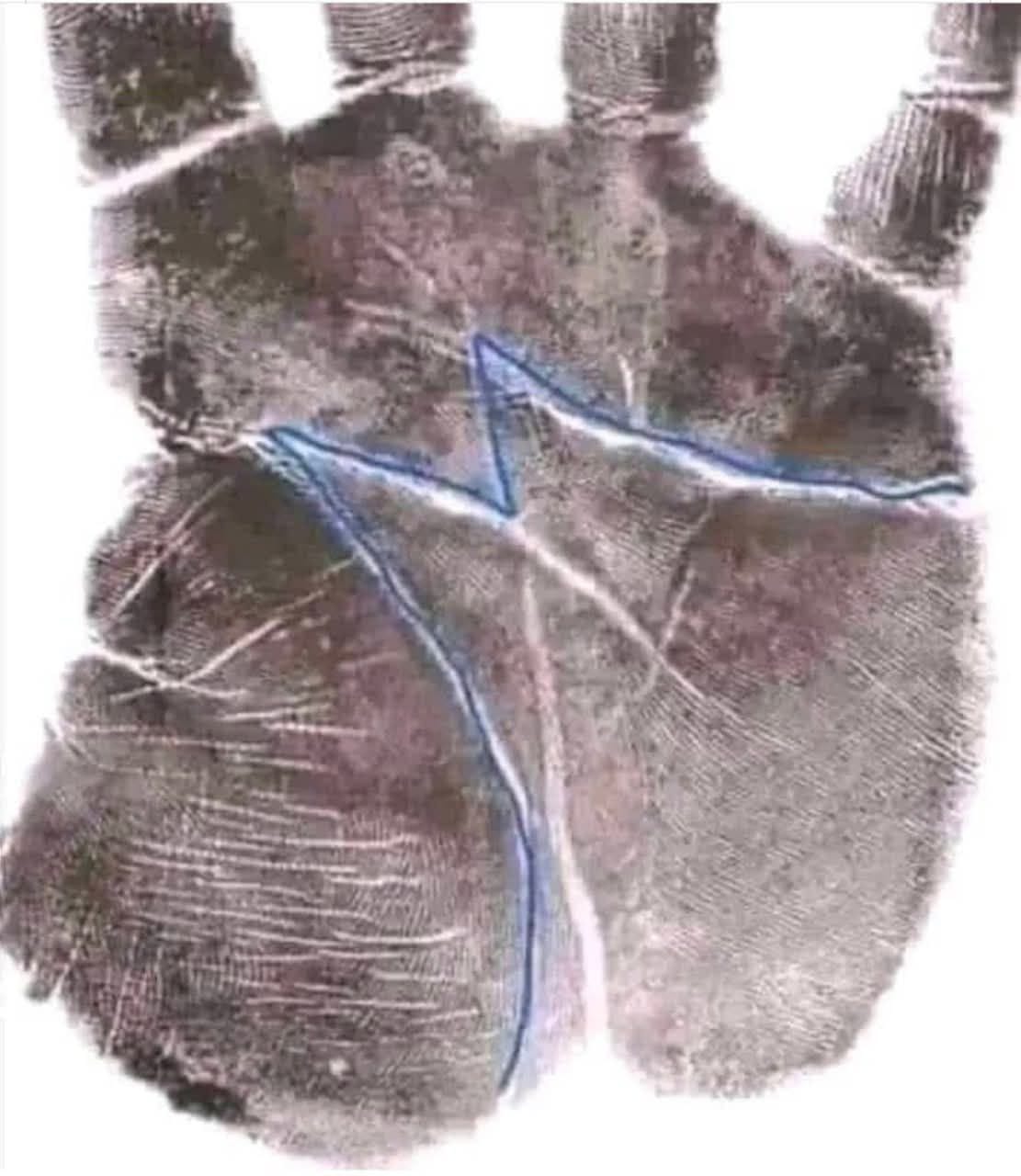
Many people have, at some point, looked at their palms and wondered whether the lines crossing their hands mean anything beyond simple biology. Among the most talked-about markings is a pattern that appears to form the letter “M.” Social media posts and popular articles often claim that this marking is rare and associated with special abilities, leadership qualities, or future success. But what does this symbol actually represent, and how much of it is rooted in fact?
To understand the fascination with the so-called “M” on the palm, it helps to begin with the broader context of palmistry. Palmistry is an ancient practice that dates back thousands of years and appears in many cultures, including those of India, China, Greece, and the Middle East. Practitioners of palmistry believe that the lines, shapes, and proportions of the hands can offer insight into personality traits, tendencies, and life experiences. Importantly, palmistry has long been regarded as a cultural tradition or interpretive art rather than a scientific discipline.
From a biological perspective, the lines on our palms—known as palmar creases—form during early fetal development. They develop as the hand grows and flexes in the womb, and once formed, they tend to remain relatively stable throughout life. Like fingerprints, palm creases are highly individual. No two people have identical patterns, even among identical twins. However, uniqueness does not imply hidden meaning in a scientific sense.
Palmistry traditionally identifies several major lines that appear on most human hands. These include the heart line, which runs across the upper palm; the head line, which crosses the middle of the palm; and the life line, which curves around the base of the thumb. Some people also have a fate line or sun line, which run vertically through the palm. In palm-reading traditions, these lines are interpreted symbolically rather than literally.

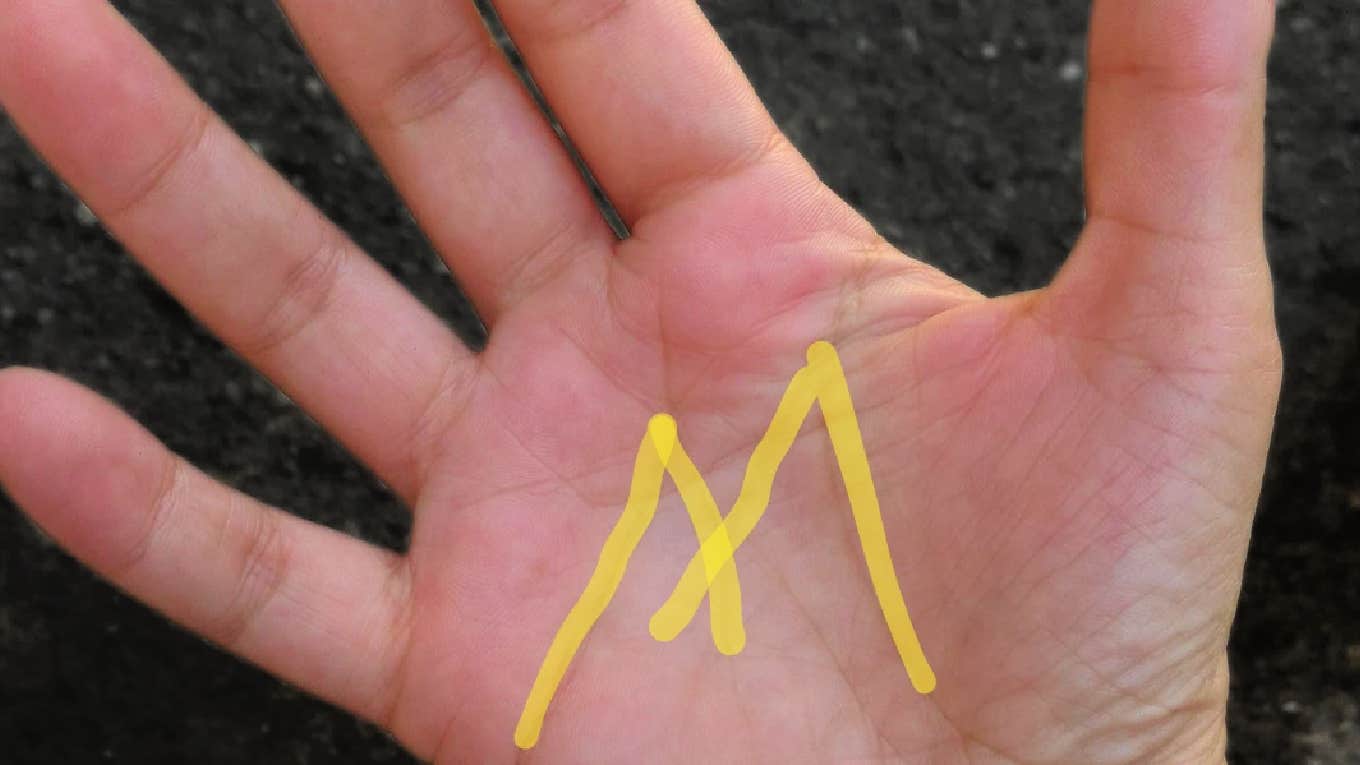
The “M” shape is said to appear when certain major lines intersect in a particular way. In palmistry lore, this usually involves a combination of the heart line, head line, life line, and sometimes the fate or sun line. When these lines intersect clearly, they can visually resemble the letter “M.” This configuration has been popularized online as being extremely rare, often claimed to occur in only one or two percent of the population. However, there is no scientific data to support precise statistics about how common or uncommon this pattern actually is.
In traditional palmistry interpretations, the “M” shape is often associated with strong intuition, leadership ability, and keen perception. Some palm readers suggest that individuals with this marking are particularly good at understanding people, making decisions, or navigating complex situations. These interpretations are symbolic and vary widely depending on the school of palmistry being followed.
It is important to note that palmistry does not claim to predict the future in a concrete or measurable way. Even within the tradition itself, practitioners often emphasize that palm lines reflect tendencies rather than destiny. They are said to suggest how a person might approach life, not what will definitively happen to them.
One term that is frequently confused in popular articles is the “Simian line.” In medical and anatomical terminology, a simian crease refers to a single transverse palmar crease, where the heart line and head line merge into one continuous line across the palm. This feature is present in a small percentage of the population and can occur in people with no health issues at all. It is also seen more frequently in certain genetic conditions, which is why medical professionals treat it as an anatomical variation rather than a mystical sign.
In palmistry folklore, however, the simian line is often reinterpreted symbolically and associated with intense focus or determination. This is a cultural interpretation, not a medical or psychological assessment.
Some modern articles claim that the “M” marking must appear on the non-dominant hand to be meaningful, suggesting that the non-dominant hand reflects innate traits while the dominant hand reflects learned behavior. Again, this distinction comes from palmistry tradition rather than scientific research. From a biological standpoint, there is no evidence that palm lines on one hand carry more psychological significance than those on the other.
Public figures are often cited as examples of people who allegedly have an “M” on their palms. Names such as Meghan Markle, Hillary Clinton, and Robert De Niro are frequently mentioned in popular media. However, these claims are usually based on informal observation of photographs rather than verified analysis, and they do not establish any causal relationship between palm markings and achievement.

Psychologists point out that humans are naturally inclined to find patterns and assign meaning to them, a tendency known as pattern recognition. When people are told that a particular marking is rare or special, they may be more likely to notice it and interpret their own experiences in ways that confirm the belief. This phenomenon, known as confirmation bias, helps explain why such ideas remain popular despite the lack of scientific evidence.
From a scientific perspective, there is no proven link between palm lines and intelligence, personality traits, leadership ability, or future success. These aspects of human life are shaped by a complex interaction of genetics, environment, education, opportunity, and personal choices. While palmistry can be an interesting cultural or symbolic practice, it should not be viewed as a diagnostic or predictive tool.
That said, many people find value in palm reading as a form of reflection. Looking at one’s hands and considering symbolic interpretations can encourage self-awareness, introspection, and personal storytelling. In this sense, palmistry functions more like a narrative framework than a factual system. It offers metaphors rather than measurements.
Ultimately, the fascination with the “M” on the palm speaks to a broader human desire to understand identity and potential. People are drawn to the idea that something visible and personal might hint at deeper qualities or hidden strengths. While science does not support these claims, the stories themselves reveal how people seek meaning and reassurance.
If you notice an “M”-shaped pattern on your palm, it does not mean that you are destined for greatness, nor does its absence indicate a lack of potential. Palm lines are natural variations of human anatomy, shaped before birth and largely unchanged throughout life. What truly shapes a person’s path is not written on the skin, but built through actions, decisions, relationships, and resilience.
Understanding the difference between cultural tradition and scientific evidence allows us to appreciate palmistry for what it is: a long-standing symbolic practice that reflects human creativity and curiosity, rather than a hidden code that determines destiny.