
For many years, First Ladies of the United States have taken part in a holiday tradition that brings comfort and a sense of normalcy to young patients spending Christmas in the hospital. Melania Trump continued that tradition during her latest visit to Children’s National Hospital, where she read a Christmas book, greeted families, and helped create a cheerful moment during a difficult time. While the visit was warmly received inside the hospital, online reactions afterward took a very different tone once video clips circulated across social platforms.

The tradition dates back to the late 1940s, when Bess Truman visited the hospital during the holiday season. Since then, the yearly appearance has evolved into a symbolic reminder that the White House acknowledges families facing challenges during a time normally associated with celebration. No matter which administration is in office, the gesture remains largely the same: bring encouragement, read a holiday story, and share a few minutes of joy with young patients who may not be able to spend Christmas at home.
This year’s visit took place on December 5th. Hospital staff described the atmosphere as warm and festive, with holiday decorations throughout the halls and rooms. Melania Trump was welcomed by two young patients, Faith and Riley, who walked with her through the hospital. Staff members noted that the children’s enthusiasm helped brighten the environment, giving the visit a lighthearted tone from the beginning.
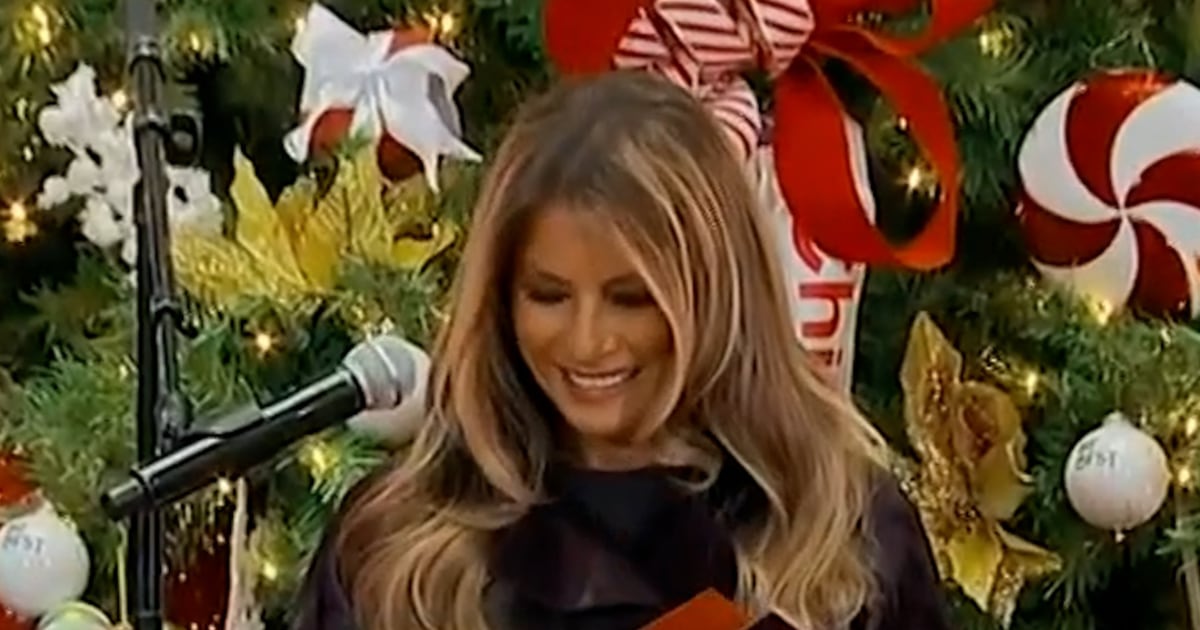
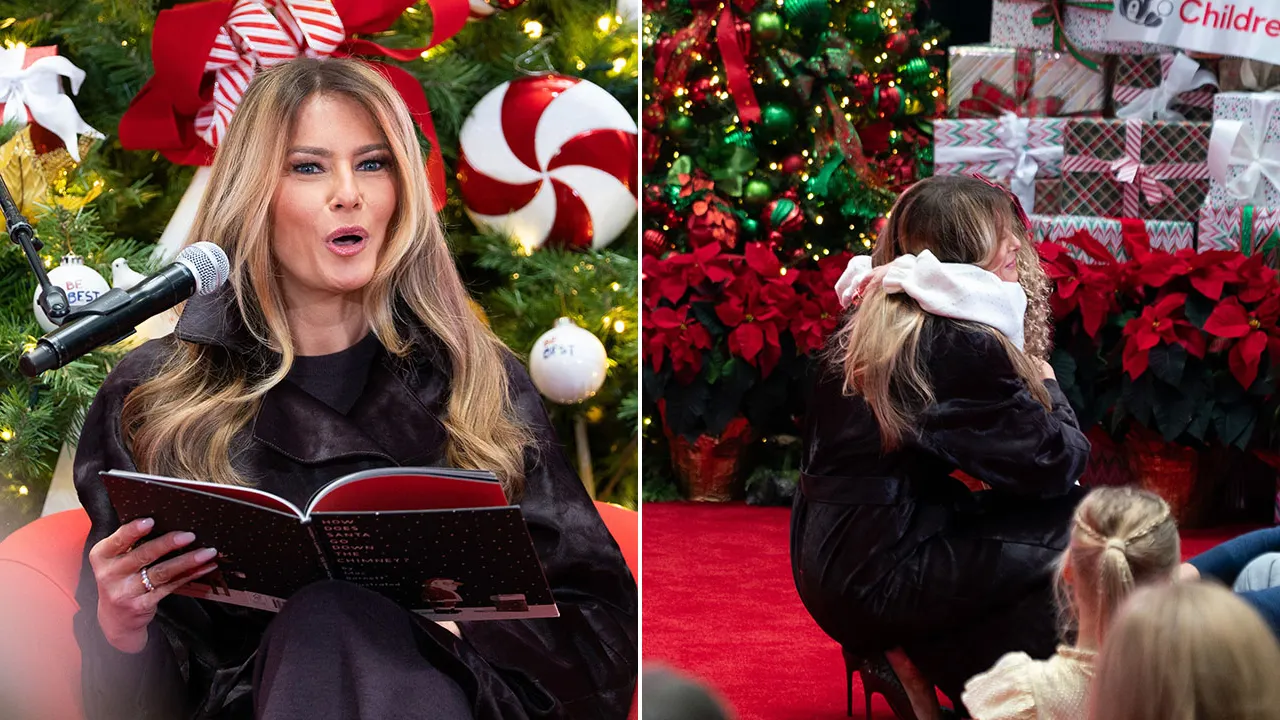
Inside the decorated reading area, Melania Trump sat down with a group of children to read How Does Santa Go Down the Chimney?, a playful picture book by Mac Barnett. A Christmas tree, garlands, and holiday lights set the scene as the children gathered around her, many holding toys or stuffed animals. According to hospital employees, the children listened attentively and reacted joyfully to the illustrations and humorous questions in the story.
However, once video excerpts from the event were shared on social media—particularly on X—online reactions quickly shifted. Commenters focused on moments when Melania Trump paused while reading or pronounced words with a noticeable accent. As English is her third language, her speech has long been a subject of public attention. Some online users highlighted her accent, while others commented on her phrasing or delivery. As the clips spread, discussion shifted from the reading itself to broader debates about expectations placed on public figures.
While the criticism grew on social media, the environment inside the hospital remained centered on the children’s experience. Families later shared that the young patients were engaged not in critiquing her reading style but in reacting to the story’s illustrations and imagining Santa’s Christmas Eve journey. The children were focused on the book’s playful questions, laughing at pictures of Santa navigating chimneys and discussing what presents they hoped to receive.
After finishing the story, Melania Trump wished the children happiness, strength, and a joyful holiday season. She reminded them that Christmas celebrations could reach them no matter where they were spending the holiday and shared a message of goodwill from President Donald Trump. She then continued the longstanding tradition of giving gifts to the children, taking time to speak with families and greet patients individually. Many parents expressed appreciation for the visit, noting that it provided a meaningful break from the hospital routine.
Outside the hospital setting, the debate continued online. Supporters argued that criticisms of her reading were excessive and overlooked the purpose of the visit. Others maintained that public figures are often scrutinized and that such reactions are not uncommon in the digital age. Some users discussed the broader expectations placed on First Ladies, questioning whether those expectations should involve public speaking skills, emotional expression, or other traits.
Melania Trump has long been a figure who attracts significant commentary whenever she appears publicly. Her reserved manner, accent, and understated style have been interpreted in a variety of ways. Some see her demeanor as calm and composed, while others view it as distant or unemotional. These contrasting interpretations often shape the public narrative around her appearances, even when the events themselves are straightforward.

Throughout her time in the public eye, Melania Trump has consistently spoken several languages and maintained a relatively private personal style. Her preference for limited public commentary means that audiences frequently form their own conclusions about her based on brief appearances or isolated moments. This tendency is amplified in online spaces, where short video clips can quickly become the basis for large-scale discussions.
The reaction to her hospital visit highlights the broader environment in which public figures operate today. Social media platforms amplify even small details, leading to debates that extend far beyond the original event. While these conversations can generate widespread visibility, they often overshadow the intended purpose of the visit—in this case, offering comfort to children spending the holidays in medical care.
Inside Children’s National Hospital, staff and families emphasized that the impact of the visit was positive. They described moments when children smiled or laughed for the first time in days, and families expressed gratitude for the time and attention given to patients. Hospital staff stated that the visit helped lift spirits and brought a sense of celebration to the pediatric units.
The broader question raised by the online discussion is how public expectations shape the narrative surrounding First Ladies and their roles. The traditional tasks associated with the position—reading to children, participating in holiday events, visiting hospitals—often exist alongside modern pressures, including instant digital commentary and the rapid spread of public opinions. These pressures can create a disconnect between the experience of those present at an event and the narrative that emerges afterward.
Observers have noted that reactions to public figures, especially those connected to political families, often depend on pre-existing views rather than the specifics of the event itself. As a result, seemingly simple moments—such as reading a children’s book—can become subjects of widespread debate. This dynamic reflects the broader polarization of public discourse, where actions are sometimes interpreted through the lens of political identity rather than the context in which they occur.
Still, the primary purpose of the visit remained unchanged: to bring comfort and holiday cheer to young patients. For the families present, the focus was on the children, their reactions, and the sense of inclusion created by the visit. Even brief moments of joy can be meaningful in a hospital, where days are often filled with routines of treatments, appointments, and uncertainty.
As with many events that involve public figures, the online conversation will likely fade as other stories emerge. The discussions, critiques, and debates may continue for a short time, but the hospital experience itself remains centered on the personal interactions that took place. Staff members and families will remember the visit for its immediate impact—smiles, gifts, and the sense that the holiday season reached their children despite the challenges they were facing.
Melania Trump’s visit did not unfold without public commentary, but for the patients and families inside the hospital, it created a moment of connection and celebration. The tradition continues, shaped each year by the children who gather to listen, by the volunteers and staff who create the environment, and by the hope that even small gestures can bring comfort during the holidays.