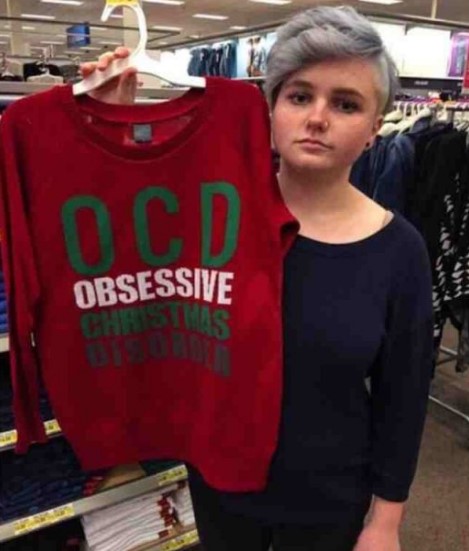
In recent years, shoppers have become increasingly vocal about how products, packaging, and marketing choices make them feel. Social media has amplified these conversations, allowing customers to raise concerns instantly and publicly. One such discussion emerged after a customer at Target questioned the appropriateness of a holiday-themed sweater, sparking a broader conversation about humor, mental health awareness, and how retailers navigate feedback in a rapidly changing cultural climate.
Target, one of the largest retail chains in the United States, carries an enormous seasonal clothing collection every year. Most items pass without much attention, but occasionally, a single design ignites online debate. This particular situation highlights how consumers engage with brands today and how companies balance creativity, humor, and sensitivity.
The Sweater That Caught a Shopper’s Attention

The product in question featured a festive slogan: “OCD: Obsessive Christmas Disorder.” To many customers, this type of lighthearted holiday humor is common on novelty clothing. However, for others, especially those aware of the seriousness of obsessive-compulsive disorder, the wording felt dismissive of a real mental health condition.
The sweater was part of Target’s seasonal apparel lineup and was displayed alongside other themed shirts. Most shoppers viewed it as playful, but one woman, Reign Murphy, felt the design trivialized a condition that affects millions of Americans. She posted a photo of the sweater on Twitter, sharing her view that the wording could be hurtful or insensitive to individuals living with OCD.
Murphy’s post quickly attracted responses. Some users agreed, stating that mental health diagnoses should not be used as punchlines for humor. Others felt the sweater was simply a harmless joke associated with holiday enthusiasm. Like many online discussions, the reaction was mixed and reflected the diversity of public opinion.
Understanding the Concerns

Obsessive-compulsive disorder is a mental health condition affecting an estimated 2.2 million adults in the United States. It involves intrusive thoughts, repetitive behaviors, and significant disruptions in daily life. Because of its complexity, many individuals with OCD advocate for more accurate public understanding and less casual misuse of the term.
From that perspective, critics argued that the sweater’s slogan risked minimizing the seriousness of OCD by using its acronym in a humorous, unrelated context. Supporters of Murphy’s viewpoint felt companies should consider how certain phrases might unintentionally perpetuate misunderstandings about mental health.
However, others pointed out that novelty holiday clothing has long used exaggerated or playful interpretations of medical or psychological terms as part of seasonal humor. They argued that while some may find the wording insensitive, the intention behind such apparel is usually to be lighthearted, not dismissive.
Social Media Responses — A Mix of Agreement and Pushback

Once the sweater began circulating online, hundreds of social media users joined the debate. Some expressed support for Murphy, noting that the phrase could feel exclusionary to individuals managing OCD symptoms. Others responded with humor, arguing that novelty clothing is not meant to be taken literally. The responses ranged from serious reflections on mental health awareness to lighthearted jokes that played on the situation.
This mixture of humor and concern is typical of online conversations today. Many users express empathy for those affected by mental health challenges, while others push back against what they see as overly strict interpretations of everyday expression. The debate illustrated how cultural sensitivity and personal perspective intersect in modern consumer spaces.
Target’s Response
Following the online discussion, a Target representative, Jessica Carlson, issued a statement acknowledging the concerns raised. She noted that the company did not intend to offend or dismiss the seriousness of OCD or any mental health condition. Carlson apologized to customers who felt uncomfortable with the design but stated that the sweater would remain available for purchase.
Target’s response emphasized that products are not created with the intention of exclusion and that the company welcomes customer feedback. At the same time, it underscored the challenge major retailers face: serving tens of millions of shoppers with differing tastes, sensitivities, and expectations.
Broader Debates About Humor and Sensitivity in Retail

This situation is part of a larger conversation happening across many retail industries. As social attitudes evolve, consumers increasingly ask companies to consider how their products may be interpreted by people with differing life experiences. Brands must often decide whether to modify or remove items that some customers find objectionable, even if others view the same items as harmless or humorous.
What one person considers playful holiday wordplay, another might see as trivializing a potentially serious struggle. Retailers have to balance these perspectives while maintaining creative freedom and appealing to diverse audiences.
In many cases, companies choose to keep products on shelves if they meet general merchandising standards and legal guidelines, but they also acknowledge feedback publicly to show they understand customers’ viewpoints. This middle-ground approach aims to respect a range of opinions without allowing a single interpretation to dictate inventory decisions.
Additional Concerns Raised by Other Shoppers
This sweater was not the only clothing item to attract attention. Another shopper raised concerns about shirts labeled with terms such as “bride,” “trophy,” and “Mrs.” Some individuals argued that such labels reinforced outdated stereotypes and suggested objectification. Others felt that wedding-themed apparel is common and typically purchased voluntarily by customers who enjoy those motifs.
Again, the responses reflected a wide spectrum of interpretations. While some saw the shirts as unnecessary or insensitive, others viewed them as light-hearted merchandise intended for celebrations or events. The discussion highlighted how personal beliefs shape how people interpret seemingly simple clothing designs.
Why These Conversations Matter
Although novelty sweaters or themed shirts may seem like small issues in the wider landscape of consumer culture, they reflect broader societal shifts. Mental health advocacy has grown significantly in recent years, leading to increased awareness about respectful language and representation. At the same time, humor remains an important part of holiday culture, marketing, and retail creativity.
This tension — between sensitivity and expression — is becoming a regular feature of public dialogue. Large companies like Target serve as focal points because their visibility and wide distribution mean even a single item can reach millions of customers.
The debate demonstrates:
-
how quickly consumer feedback spreads through social media
-
how personal experiences shape interpretations of everyday products
-
how corporate communication strategies must adapt to diverse responses
It also shows that conversations about language, identity, and representation are evolving. What was common in retail decades ago may now be viewed through a different cultural lens.
Finding Balance as Consumer Expectations Change
As shoppers become more aware of mental health, inclusivity, and representation, retailers must find ways to honor these values while still offering creative, seasonal, and expressive merchandise. Target’s approach — acknowledging concerns while keeping the product available — reflects an attempt to balance varying viewpoints without making assumptions about what all customers may prefer.
For consumers, the situation is a reminder that reactions to products are often subjective. What feels uncomfortable or insensitive to one shopper may appear humorous or harmless to another. In a diverse society, these differences in interpretation are inevitable.
The Bigger Picture
In the end, the debate over a seasonal sweater is part of a wider movement in which customers ask brands to consider how language and design choices influence understanding. It also reinforces the importance of open, respectful communication between companies and the people they serve.
Whether someone found the sweater amusing, insensitive, or simply unremarkable, the broader takeaway is clear: modern retail environments are shaped as much by cultural awareness as they are by customer demand. As expectations continue to evolve, companies will face new questions about how best to reflect the communities they serve.