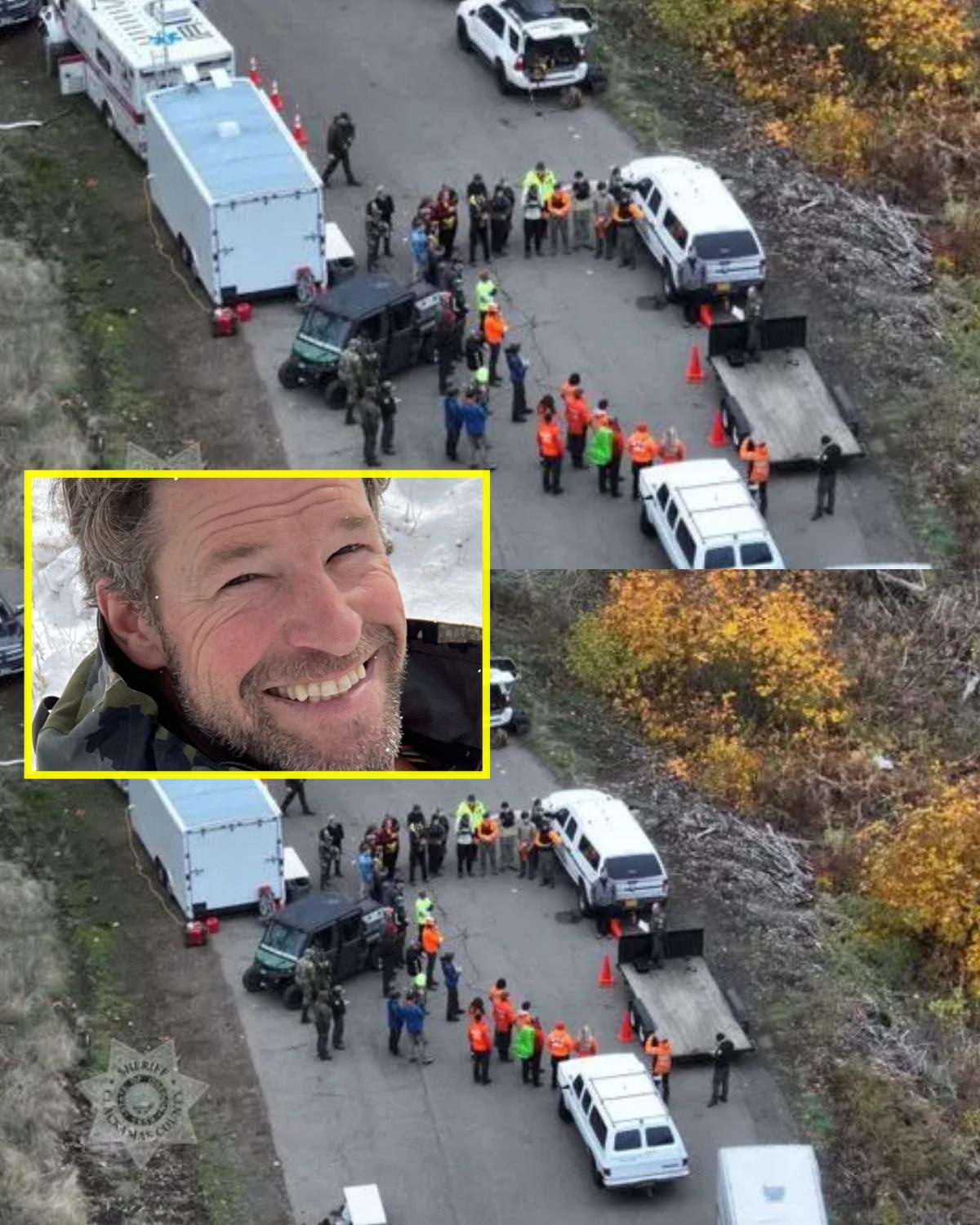
On the final morning of October, 51-year-old Devon Dobek set out for what should have been a routine hunting trip in Oregon’s Mount Hood National Forest. The early chill carried the unmistakable signature of late autumn in the Pacific Northwest — crisp air, thin mist, and the quiet stillness of a forest preparing for winter. To Devon, the morning felt familiar, comforting, and predictable.
He rose early, packed his gear with the same careful precision he had practiced for decades, and loaded his truck for a day in the wilderness he knew better than most people know their own neighborhoods. Before leaving, he sent a quick message to a friend saying he expected to return early after securing a deer.
It was the last communication anyone received from him.
By nightfall, when Devon’s family realized he had not come home — and wasn’t answering his phone — a wave of worry swept through the community. Devon was an experienced hunter, methodical in his habits, and deeply familiar with the rugged terrain surrounding Mount Hood. For him to be overdue was unusual. For him to be unreachable was alarming.
When search teams reached the Fish Creek Trailhead, they found his truck parked exactly where it should have been. Inside, his belongings were undisturbed. Nothing appeared out of place — except for the fact that Devon was nowhere to be found.
A Man of the Outdoors

Devon Dobek was more than an avid hunter; he was someone shaped by the forests and mountains of Oregon. Friends described him as the kind of person who treated the wilderness with quiet respect. He understood its beauty, its unpredictability, and the responsibility it demanded of anyone who entered it.
Born and raised in Hubbard, Devon had built a life centered on family, community, and the outdoors. His children learned to love the forest from him. Friends often relied on him for guidance on trails, safety tips, and hunting strategy. He valued preparation, carried reliable equipment, and never underestimated the landscape — qualities that made his disappearance even harder to comprehend.
To those who knew him, it seemed impossible that Devon would simply lose his way. Yet the vastness of Mount Hood National Forest — with its thick trees, steep canyons, and remote slopes — had a way of reminding even the most seasoned outdoorsmen that nature is always in charge.
The Day Everything Changed

October 31 began like countless other mornings for Devon. The brief text he sent mid-morning indicated confidence, routine, and no hint of danger. But the forest that day offered a different reality.
The Fish Creek area, while familiar to Devon, is challenging terrain even in ideal conditions. Volunteer searchers later described the landscape as steep and rugged, still showing scars from the 2020 wildfires. Many trails in the region curve unpredictably. One wrong step can lead to unstable ground or sudden drops. Cell service is spotty or nonexistent.
By the time the sun set that evening, concern had escalated. Calls to Devon went unanswered. No one had seen him or heard from him since that morning. Something was wrong.
The Search Begins
The Clackamas County Sheriff’s Office quickly launched an intensive search effort. Deputies, volunteers, professional rescue teams, and specialized units converged on the area. Over the next several days, the search would involve:
-
K-9 units trained in tracking
-
Drones scanning cliffs and ravines
-
Helicopters and fixed-wing aircraft covering miles of forest canopy
-
ATV and ground teams combing the steepest terrain
More than 4,000 personnel hours would eventually be dedicated to finding Devon.
Some searchers reported hearing distant sounds they thought might have been gunshots, raising hope that Devon was signaling for help. But the source was never confirmed, and no clear trail emerged.
The wildfire-burned slopes made the search even more difficult. Some areas were unstable, others densely overgrown. In several places, searchers struggled to access narrow ridges or the bases of cliffs.
Despite the challenges, the search continued for nearly a week. Volunteers pushed themselves physically and emotionally, refusing to give up. But by November 7, after exhausting every feasible lead, the large-scale search was suspended — though the door remained open to resume efforts if new information arose.
The Breakthrough

The forest kept its silence for nearly two more weeks.
Then, on November 15, a group of community volunteers searching the area near the Fish Creek Trailhead spotted something at the bottom of a steep, rugged cliff — a place so difficult to access that earlier search teams had been unable to safely reach it.
From a distance, the volunteers saw what appeared to be a person at the base of a 400-foot drop.
Authorities were notified immediately. Rope teams and deputies responded, carefully descending the hazardous slope. The process was slow and methodical, requiring cautious navigation of unstable ground and sheer rock faces.
When the remains were recovered and examined, the Clackamas County Medical Examiner’s Office confirmed the heartbreaking news: the body belonged to Devon Dobek. His death was ruled accidental, consistent with a fall in extremely dangerous terrain.
What Likely Happened
While the exact circumstances may never be fully known, the location where Devon was found offered clues.
The cliff was steep, partially eroded, and surrounded by areas affected by past fires. Loose soil, shifting rocks, and hidden drop-offs create conditions that can be hazardous even for the most capable outdoorsmen.
Experts suggest that a simple slip — potentially while tracking game or navigating uneven ground — could have led to a fall. In wilderness environments, accidents can occur in seconds, often without time for reaction or recovery.
Devon’s disappearance was not the result of inexperience or recklessness. It was a reminder that nature, especially in remote regions, can present unforeseen dangers even to those who prepare thoroughly.
The Emotional Impact
The confirmation of Devon’s death left a deep void in the community. Those who had spent days searching were devastated. Family members, who had clung to hope during the long period of uncertainty, were confronted with the reality that the forest had kept Devon far longer than anyone wanted to imagine.
Friends described devastation, disbelief, and sorrow — mixed with gratitude toward the volunteers who refused to give up. Many of those volunteers had never met Devon, yet they spent hours navigating harsh slopes, dense brush, and cold autumn weather in hopes of bringing him home.
The emotional weight affected everyone involved: family, friends, neighbors, and first responders. Devon’s disappearance and the search that followed united the community in determination and later, in mourning.
A Cautionary Story for the Outdoor Community
Devon’s death serves as a somber reminder that outdoor recreation, even when approached with care and expertise, carries inherent risk. Hunters, hikers, and adventurers across the Pacific Northwest reflected on the lessons from Devon’s story:
-
Always share precise route information before entering remote terrain.
-
Carry updated GPS technology, backup navigation, and communication devices.
-
Understand wildfire-affected areas, which may have unstable ground even years later.
-
Travel with partners when possible, especially in steep or isolated environments.
Devon’s experience underscores an important truth: nature does not play favorites. Skill reduces risk, but cannot eliminate it.
A Legacy That Lives On
Devon Dobek is remembered not only as a skilled hunter but as a father, friend, and community member who cherished the outdoors. Stories about him are filled with admiration — for his knowledge of the forest, his dedication to safety, his kindness, and his quiet, steady presence.
His disappearance mobilized one of the most committed volunteer search efforts Mount Hood has seen in years. That response was a reflection of how deeply he was valued.
In the months following his death, friends and family continued to honor him by sharing memories and emphasizing the importance of wilderness safety — a cause Devon himself believed strongly in.
Closing Reflections
For nearly two weeks, the vastness of Mount Hood National Forest held the answers that so many people desperately sought. The search for Devon was a testament to community resilience, compassion, and the determination to bring one of their own home.
In the end, Devon’s story is one of respect — respect for the wilderness he loved, for the community that refused to stop searching, and for the fragility of life in even the most familiar landscapes.
Mount Hood’s towering cliffs and sweeping forests became the final chapter of Devon Dobek’s journey, but his memory endures in the lives he touched and the lessons he leaves behind. In every tale told about him — along trails, around campfires, and across dining tables — Devon continues to walk the wilderness he knew so well.